South Africa's Betting Shops Defy Online Trends With Unique Local Appeal
South Africa's physical betting shops continue to thrive, defying global trends toward mobile-first platforms.
, 10 min read
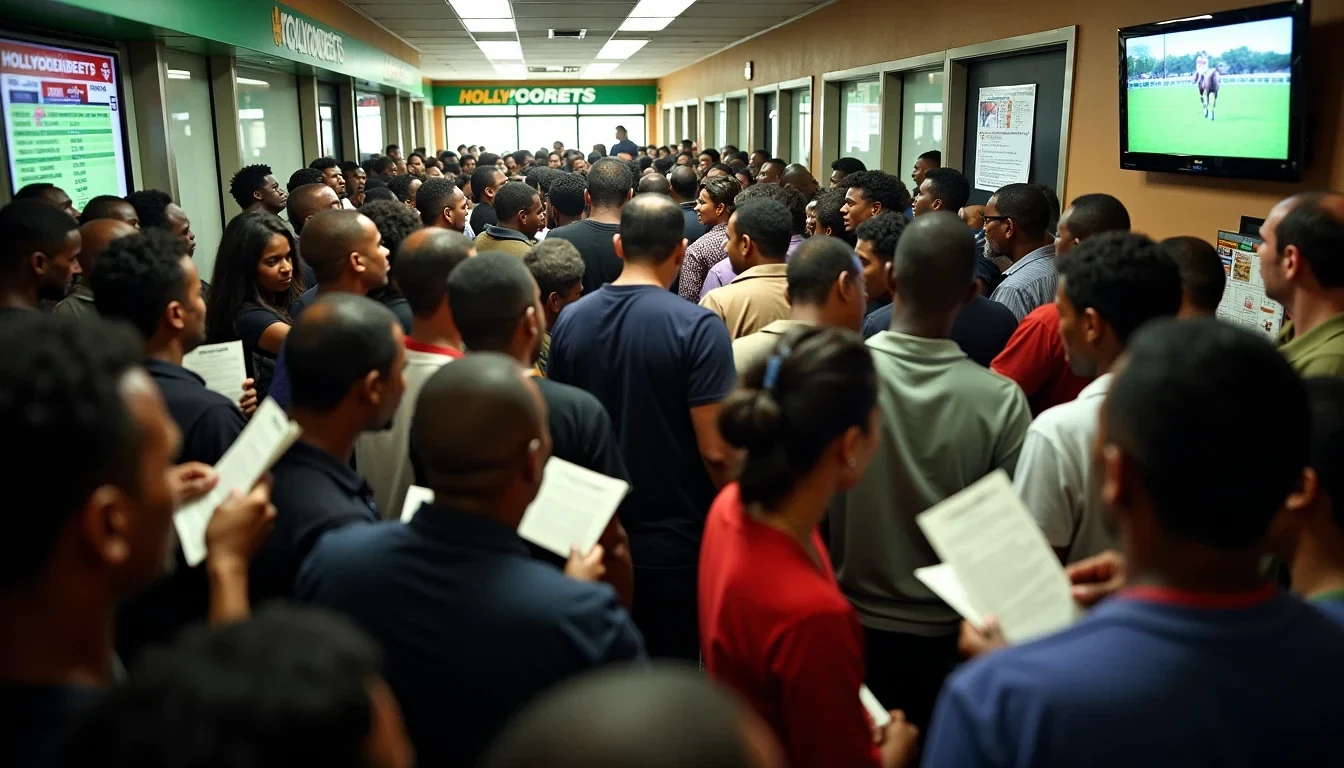
Walk into a Hollywoodbets branch in Umlazi on a Saturday afternoon and you will find a scene that should not exist according to every industry forecast. Fifty people deep at the counter, paper bet slips in hand, arguing over PSL goal-scorer odds while a television mounted in the corner shows the 14:00 race at Turffontein. This is not nostalgia or a holdout population of technophobes. This is South African betting as it actually functions in 2024, and it looks nothing like the seamless mobile-first future the consultants promised.
The global gambling industry has spent a decade predicting the death of retail betting. In the United Kingdom, the number of licensed betting shops fell by more than a third between 2008 and 2023. In Australia, the totalisator network has withered to a shadow. South Africa was supposed to follow the same arc. Instead, the country’s physical betting infrastructure has proven remarkably durable, even as mobile sportsbook revenue climbs year after year. South African punters are not slower to adopt technology; the technology has not yet replicated what the shop actually provides.
Why the shop still wins
The most obvious advantage of physical outlets is cash. South Africa remains a heavily cash-reliant economy by middle-income standards. Significant segments of the working population are either unbanked or underbanked, which makes pure digital wagering impractical. A punter who earns a weekly wage in cash, pays rent in cash, and conducts most daily transactions in cash does not want to navigate EFT delays, card verification failures, or e-wallet setup processes. He wants to hand money across a counter, receive a printed ticket, and know exactly where he stands.
Reducing the shop’s persistence to financial exclusion alone misses the social architecture. Betting shops in South African townships and working-class suburbs function as social clubs more than transactional endpoints. Regulars know the cashiers by name. They compare notes on form, dispute each other’s reads on Kaizer Chiefs lineups, and establish hierarchies of expertise that have nothing to do with algorithmic pricing. The shop is where information circulates through conversation rather than push notification. For football and horse racing in particular, this oral culture of tipping and collective judgment remains central to how many people experience wagering.
Hollywoodbets understood this from its founding in Durban in 2000. The company built its brand through relentless retail expansion, particularly in KwaZulu-Natal and the Eastern Cape, before developing its digital platform into one of the country’s most downloaded betting applications. The retail network was not a phase to outgrow. It was the foundation that made the digital product trustworthy. A punter who has visited a Hollywoodbets branch, who knows it exists as a physical place with staff who can be confronted if something goes wrong, approaches the same company’s app with a confidence that no amount of advertising could manufacture.
How the major operators split their bets
The South African market has settled into a clear segmentation among its largest operators, though the boundaries are increasingly porous. Hollywoodbets, Supabets, and to some extent World Sports Betting built their customer bases through retail density. Betway, by contrast, entered as a digital-native brand and concentrated its early efforts on online acquisition, sponsorship deals with major football clubs, and aggressive promotion of its mobile platform. Gbets and Sportingbet occupy more mixed positions, with varying emphasis on physical versus digital depending on regional strategy.
What has changed in the past five years is that virtually every operator now recognises the dual market as permanent rather than transitional. Hollywoodbets continues to open new branches even as its app usage surges. Betway, despite its online origins, has explored physical touchpoints and partnerships that put its brand into spaces where customers already gather. The logic is straightforward: South Africa’s betting market is not a funnel moving inexorably from shop to screen. It is two distinct customer bases with partial overlap, and winning means serving both without degrading either.
This hybridisation creates operational complexity that operators in more uniformly digital markets rarely face. A bookmaker must maintain shop staff, cash handling protocols, and physical security while simultaneously running app development, digital payment integration, and cybersecurity. The systems must talk to each other, or at least not actively contradict each other. A customer who deposits via the app should be able to resolve a dispute in a branch if that is what he prefers. Few operators have managed this integration cleanly, and the gaps are where customer frustration concentrates.
The friction points that determine loyalty
For all the talk of channel strategy, most punters experience the dual market through a handful of practical irritations. Can I get my money out? How long does verification take? Where do I go when the app crashes ten minutes before kickoff? These mundane questions shape retention more than any promotional offer.
Account verification illustrates the divergence sharply. Online betting in South Africa requires full FICA compliance before a customer can withdraw winnings. This means uploading proof of identity, proof of address, and sometimes additional documentation, then waiting for manual review. The process can take hours or days, and the failure modes are opaque: a blurry photograph, an address format that does not match the database, a surname with an apostrophe that breaks the form. For a punter who has just won his first substantial payout, this delay is a crisis of trust.
Physical shops handle verification differently. A customer can often place casual bets with minimal documentation. While full FICA compliance is still required for account creation or large transactions, the process benefits from human guidance. A cashier can tell him exactly what photograph will work, verify documents on the spot, and explain why his latest upload failed. This handholding has genuine value in a market where many customers are unfamiliar with digital bureaucracy.
Payment method availability follows the same pattern. Online platforms offer EFT, card payments, and various e-wallet and voucher systems. Physical shops offer cash. The withdrawal experience is where the gap becomes most acute. An online withdrawal to a bank account may take one to three business days, during which the punter has only a transaction reference number and hope. A shop payout is immediate, tangible, and socially witnessed. The psychological difference between these experiences is difficult to overstate.
Customer service channels compound the effect. Online support runs through chatbots, email queues, and call centres with variable hold times. A shop customer can stand at the counter until his problem is resolved, and the presence of other waiting punters creates social pressure for efficient resolution. This is not romanticising retail. It is recognising that accountability mechanisms differ materially between channels, and many South African customers have learned through hard experience which channel actually protects their interests.
The provincial maze
South Africa’s gambling regulation is not a single system but nine separate systems, each with its own licensing board, fee structure, and operational requirements. The National Gambling Act provides a broad framework, but provincial authorities control the specifics of who can operate where, what products they can offer, and what compliance standards they must meet.
For betting operators, this means expansion is never simply a matter of identifying a promising location and signing a lease. A new branch in Gauteng requires approval from the Gauteng Gambling Board. The same operator opening in the Western Cape faces the Western Cape Gambling and Racing Board, with different documentation requirements, different timelines, and different relationships with local stakeholders. KwaZulu-Natal operates through the KwaZulu-Natal Gambling Board, which has its own history and priorities shaped by the province’s particular betting culture.
This fragmentation shapes strategy in ways that are invisible to customers but decisive for business viability. An operator might prioritise digital expansion in provinces where retail licensing is slow or expensive, while concentrating physical investment where regulatory relationships are established and local demand is proven. The provincial structure also creates enforcement gaps and inconsistencies that grey-market operators exploit, though that is a separate story.
The regulatory complexity extends to product offerings. Some provinces have taken stricter positions on certain bet types, or on the relationship between sports betting and other gambling products. Operators must maintain legal and compliance teams capable of navigating this patchwork, adding cost that pure digital platforms in more unified jurisdictions do not bear. The burden falls heaviest on those with the most extensive retail footprints, which is one reason why even shop-heavy operators have pushed hard for digital growth: a mobile app faces fewer provincial boundaries than a branch network.
What punters actually need to know
The promotional arms race between operators generates endless content about bonus terms, free bet conditions, and odds boosts. For inexperienced punters, this noise obscures more durable questions about how betting actually works and what risks it entails.
South Africa’s betting culture has deep roots in horse racing and football. The expansion of digital platforms has introduced many customers to products they do not fully understand. Lucky Numbers, a lottery-style bet on drawn numbers that has become enormously popular, carries different probability structures than sports wagering. Live betting, with its rapid price movements and time pressure, rewards different skills than pre-match analysis. The gap between customer enthusiasm and customer comprehension creates acute reputational risk for operators, and educational content serves a genuine function here.
Resources that explain betting terminology, odds calculation, and market structures without pushing specific promotional offers are relatively scarce. Most South African gambling content is either operator advertising or bonus comparison tables. The gap between these extremes, where a punter can learn how to evaluate a bookmaker’s reliability or understand why his bet settled the way it did, is where locally grounded publications have found their audience. For readers trying to make sense of both retail and online options, Betting Shops in SA provides coverage that treats physical outlets as integral to the market rather than as a fading prelude to digital modernity.
The continental context
South Africa’s betting industry is not merely large by African standards; it is structurally distinct. The country’s racing tradition, inherited from British colonialism and adapted through decades of local ownership and township participation, created a retail infrastructure that most other African markets never developed. Kenya and Nigeria have seen explosive mobile betting growth, but largely from a standing start, without the dense network of physical shops that South African operators can still leverage.
This has implications for how South African bookmakers approach regional expansion. A company like Hollywoodbets, with its retail DNA, enters new African markets with different capabilities and different blind spots than a pure digital operator. The question of whether to replicate the shop model, adapt to purely mobile environments, or attempt some hybrid is not merely tactical. It goes to the core of what these companies understand themselves to be.
Conversely, international operators looking at Africa often misread South Africa’s persistence of retail as backwardness or friction to be overcome. The more accurate reading is that South Africa’s market has achieved a particular equilibrium between physical and digital that reflects genuine customer preferences and structural conditions, not merely technological lag. Whether that equilibrium holds, shifts, or collapses will be determined by changes in payment systems, regulation, and customer behaviour that are already visible but not yet decisive.
The hard question no one asks
Every operator in South Africa now claims to be omnichannel, to serve customers wherever and however they choose to engage. The reality is messier. The integration between retail and digital systems remains partial. A customer who registers online may find that his account history is invisible to shop staff. A shop customer who downloads the app may discover that his loyalty status does not transfer. The promise of seamlessness collides with legacy technology, provincial data restrictions, and the simple organisational difficulty of aligning two cultures of service delivery.
The harder question, rarely addressed in industry commentary, is whether seamlessness is even what customers want. The shop regular and the app user may be the same person at different moments, but they are often different people with genuinely different preferences. Forcing convergence where customers are satisfied with separation risks degrading both experiences in pursuit of a theoretical ideal.
South African betting will continue to defy simple narratives of digital triumph or retail nostalgia. The shops that look anachronistic from a London or New York perspective make obvious sense in Umlazi, in Mitchells Plain, in Soshanguve. The apps that dominate download charts have not replaced these spaces; they have layered on top of them, creating a market structure that is untidy, inefficient, and more responsive to actual customer behaviour than any consultant’s clean diagram would allow. The operators that thrive will be those that stop trying to resolve this tension and start building more skillfully within it.