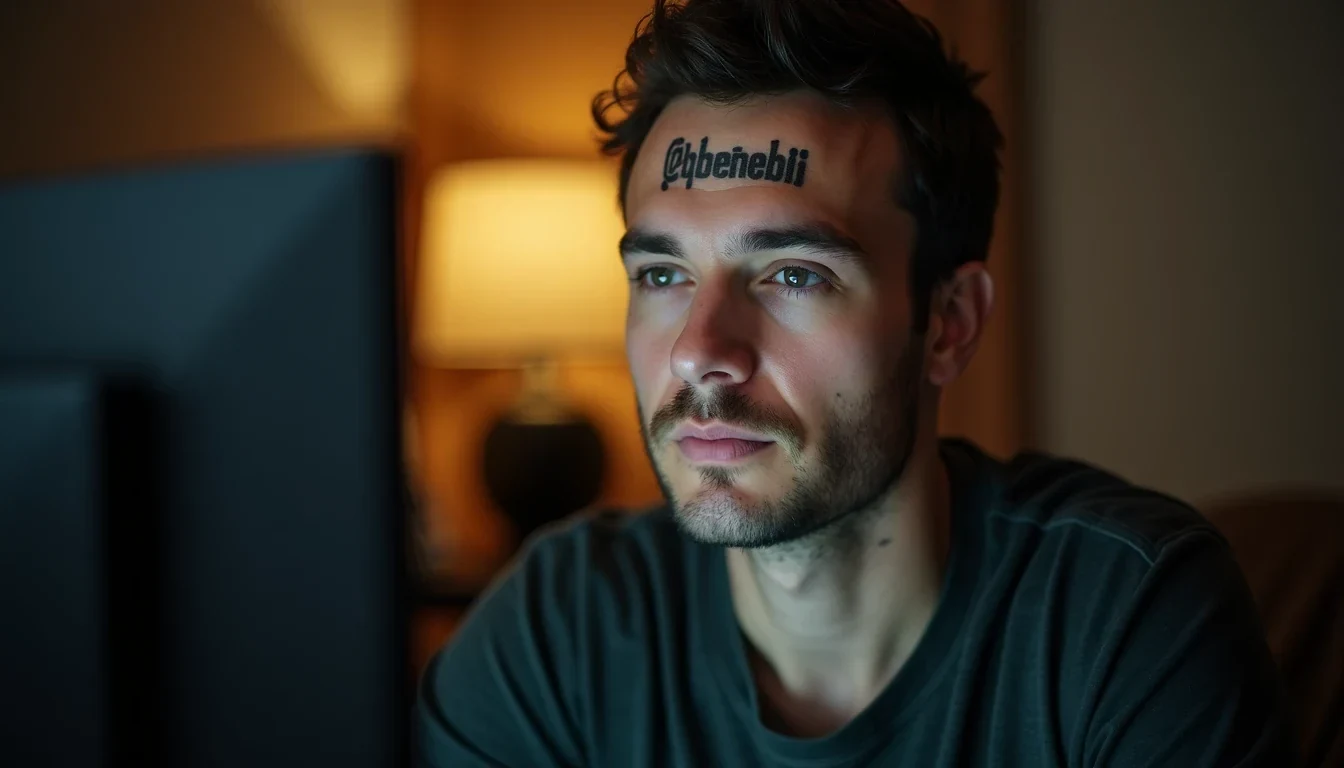
Brent Moffatt needed ten thousand dollars to clear his debts. The price was his forehead. In 2005, he became the most visible advertisement for an online casino that would vanish from his country within two years, leaving him with permanent ink for a website his neighbors could no longer legally visit. The story of how GoldenPalace.com built its brand on human skin, grilled cheese sandwiches, and streakers with back tattoos documents what happens when an industry operates without rules, finds desperate people, and moves on.
The King of Stunts
GoldenPalace.com earned its reputation by turning absurdity into headlines. The casino spent millions on publicity stunts during the early 2000s, operating in a legal gray zone where traditional advertising restrictions did not apply to the internet. Its most famous purchase came in 2004, when the company paid $28,000 on eBay for a ten-year-old grilled cheese sandwich that supposedly resembled the Virgin Mary. The sandwich generated global media coverage, and the casino displayed it as a traveling curiosity, collecting free publicity at every stop.
That same year, GoldenPalace.com sponsored Mark Roberts, a professional streaker who interrupted Super Bowl XXXVIII with the casino’s URL tattooed across his back. Millions of viewers saw the brand during the broadcast delay, and the image circulated in news coverage for weeks. In 2006, the company purchased naming rights to a newly discovered monkey species, which scientists dubbed Callicebus aureipalatii, Latin for “golden palace.” The stunt ensured the brand name would persist in biological taxonomy long after the casino stopped operating in its original form.
These were not isolated incidents. They represented a systematic approach to marketing that treated every human body, religious icon, and scientific discovery as a potential billboard. The tattoo program simply took this logic to its most literal extreme.
The Forehead Auction
Karolyne Smith did not approach GoldenPalace.com directly. She listed her forehead on eBay. The casino paid her $10,000, money she intended for her son’s private school education. Angel Brammer received $4,225 for a chest tattoo. Moffatt, already known for holding a Guinness World Record for most body piercings, took the highest-profile placement and the highest single payout for a forehead tattoo.
The transactions were straightforward. Participants received cash. The casino received permanent, walking advertisements placed on highly visible human real estate. No contract could address what happened when the advertised product ceased to exist in the buyer’s market.
The 2006 Unlawful Internet Gambling Enforcement Act made it illegal for American banks to process transactions for online gambling sites. GoldenPalace.com’s users were primarily American, so the brand lost its primary revenue source almost overnight. The casino withdrew from the U.S. market, leaving Moffatt, Smith, Brammer, and others with tattoos for a website their countrymen could no longer access. The human billboards had become monuments to a defunct business model.
The True Cost of the Ink
Within two decades, the financial mathematics of the tattoo deals had inverted. Several participants spent thousands of dollars on painful laser removal procedures, often exceeding their original payments. Others commissioned massive cover-up tattoos, burying the GoldenPalace.com branding under new artwork that required multiple sessions and substantial additional expense.
The costs extended beyond money. Participants reported social stigma and professional obstacles directly traceable to the highly visible gambling advertisements on their bodies. A forehead tattoo of a casino URL functions as a permanent first impression, one that job interviews, first dates, and casual encounters could not ignore. The casino had paid for visibility. The recipients paid for it indefinitely.
The ethical architecture of the deals deserves scrutiny. GoldenPalace.com targeted individuals in financial distress, Moffatt with his debts, Smith seeking school tuition, and offered one-time payments for permanent bodily modifications. The company bore no ongoing obligation. When the legal environment shifted, the casino pivoted to new markets and business models. The tattooed individuals had no comparable exit option.
How Early Casinos Found Players Before Facebook Existed
To understand why GoldenPalace.com resorted to stunts and skin, consider the advertising environment of the late 1990s and early 2000s. Jackpot City Casino launched in 1998, when Mark Zuckerberg was fourteen years old and “The Facebook” would not exist for another six years. Traditional platforms including television, radio, and early search engines either banned or heavily restricted gambling advertisements.
Operators developed alternative channels out of necessity. They purchased aggressive pop-up adware through file-sharing networks like Napster and Kazaa, interrupting music downloads with casino promotions. They exploited the “.net” loophole, creating free-to-play educational sister sites that funneled users to real-money “.com” versions. Most systematically, they engaged in brute-force SEO, constructing networks of millions of phantom websites, hidden text pages, and link directories to manipulate early search engines including Yahoo, Altair, and Ask Jeeves.
When Google launched its self-service AdWords platform in October 2000, the system ranked advertisements purely by bid amount. Online casinos, with profit margins that dwarfed most legitimate industries, easily outbid competitors for nearly any keyword. Casino affiliates bought ads not merely for gambling terms but for unrelated high-traffic searches including popular video games, movies, and news stories. Gambling advertisements became among Google’s most lucrative revenue streams.
This arrangement ended abruptly in April 2004, when the U.S. Department of Justice warned that advertising offshore online gambling violated the Federal Wire Act. Google, Yahoo, and MSN purged casino advertisements overnight to avoid federal fines and criminal liability. The move cost the search engines tens of millions of dollars in quarterly revenue.
The Black Hat Arms Race
With paid advertising eliminated, casino affiliate marketers pivoted to manipulative SEO tactics throughout the mid-2000s. Automated bots flooded comment sections of unrelated blogs, university forums, and small business websites with hidden links to casino pages. Marketers created thousands of dummy websites as link farms to artificially inflate Google’s PageRank system. Techniques including hidden text and cloaking showed different content to search engines than to human users.
Google spent the subsequent decade rewriting its search algorithms, releasing major updates including Panda and Penguin, largely to combat the casino and pharmaceutical spam that had dominated results. The arms race between search engines and gambling marketers shaped the fundamental architecture of how modern search works. Early online casinos did not merely exploit the internet’s unregulated period; they helped force its regulation through the scale of their abuse.
The Pivot and the Present
Two major forces collapsed GoldenPalace.com’s original model. The UIGEA eliminated its American market. Simultaneously, the platform faced repeated controversies over bonus policies that required users to wager promotional funds up to fifty times before cashing out, and frequent refusal of payments to players accused of playing primarily with free money. Software provider Microgaming terminated its contract with the casino, forcing platform migrations that further destabilized the operation.
Parent company Consolidated Information Systems withdrew from the U.S. and shifted to gaming and affiliate software management networks including IGSOnline and ProgressPlay. Smaller sister brands were folded into an internal casino affiliate program rather than operating as a global consumer casino. The corporate group pivoted to regulated European markets, notably operating as a licensed land-based gaming hall operator and localized sports-betting site in Belgium. Today, the historic goldenpalace.com domain routes traffic to partner portals, localized betting applications, and affiliate programs. The original un-geoblocked global platform is no longer viable in major regions including North America.
For operators in contemporary regulated markets, the GoldenPalace.com era functions as a negative example. Platforms like New USA Casinos operate under strict licensing requirements, advertising standards, and responsible gambling obligations that would have made the tattoo program, the streaker sponsorship, and the grilled cheese purchase impossible. This represents a fundamental shift in how the industry treats its customers and its marketing subjects.
What Remains
The Callicebus aureipalatii still carries its name in scientific literature. The grilled cheese sandwich presumably still exists somewhere, preserved as a curiosity. The tattoos, more painfully, still mark their human hosts. GoldenPalace.com built its brand on the principle that any surface could be monetized, any attention was good attention, and the internet’s lack of rules was a feature to exploit rather than a temporary condition.
The casino’s own trajectory proved otherwise. The unregulated period ended. The American market closed. The software provider departed. The brand that had paid to be permanently inscribed on human bodies found that its own existence was far more temporary than the advertisements it commissioned.
For those who became human billboards, the lesson arrived too late and too expensively. Moffatt’s ten thousand dollars cleared his immediate debts. The forehead tattoo created new obligations that outlasted the casino itself. In the Wild West of early online gambling, the house did not always win. But the players who staked their skin against the house’s money almost always lost.